Reviewing the 2026 Happy New Year Design for Craft Fairs
As an embroidery designer who has spent countless hours hooping, stitching, and selling at weekend markets, I know that not every machine embroidery design is created equal. Some look beautiful on a screen but fail to capture attention in a busy booth. Others are nightmares to produce in bulk. Today, I am putting the 2026 Happy New Year design under the microscope. This isn't just about aesthetics; it is about viability for your small shop product line.
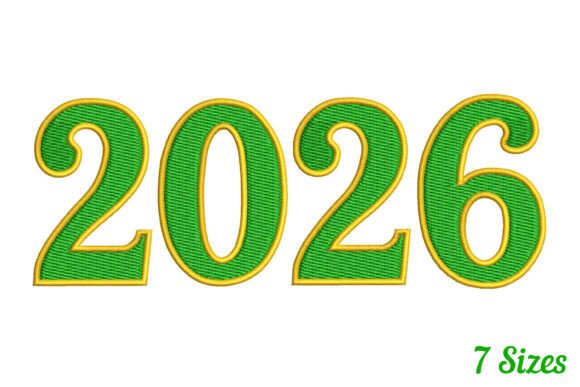
The premise of this design is straightforward yet powerful. We are looking at a bold celebration of a milestone year, utilizing a classic collegiate varsity font. The description highlights a vibrant green tatami fill accented by crisp details. For those of us preparing our inventory for the post-holiday rush, this timing is critical. While many sellers focus exclusively on Christmas, the smart Etsy seller knows that January sales are driven by resolution energy, fresh starts, and gift card spending. Let’s break down how this specific embroidery file performs in the real world.
First Impressions: Bold, Modern, and High-Impact
When I first visualize the 2026 Happy New Year design, the immediate impression is one of confidence. The choice of a collegiate varsity font suggests a sporty, energetic, and modern vibe. It is not delicate or farmhouse-style; it is loud and proud. The vibrant green tatami fill is a strategic choice. Green symbolizes growth, money, and renewal—perfect themes for a new year. However, from a production standpoint, "vibrant" means we must be meticulous with our thread choices. A dull olive will kill the energy of the design, while a neon lime might look cheap. You need a true, rich kelly or emerald green to maintain that premium feel.
This design feels decorative yet functional. It does not try to be overly intricate, which is a massive plus for batch production. In a craft fair setting, customers scan tables quickly. A bold, high-contrast design like this stops the eye faster than a subtle, tonal piece. It screams "celebration" without needing additional context.
Product Application: Where Does It Sell Best?
To maximize your return on investment, you need to place this digital embroidery file on products that complement its bold nature. Here is my assessment of potential craft fair product applications:
- Tote Bag Design: This is arguably the strongest candidate. A canvas tote with a large, centered 2026 Happy New Year motif becomes an instant statement piece. The flat surface of a tote bag allows the tatami fill to lay smoothly, showcasing the crispness of the varsity font. It appeals to students, gym-goers, and anyone looking for a fresh start organizer.
- Apron Embroidery: Kitchen aprons are huge sellers. Placing this design on the bib of a sturdy cotton apron creates a fun, thematic item for hostesses. It transforms a standard kitchen tool into a party accessory for New Year's Eve gatherings.
- Tea Towel Embroidery: Tea towels are excellent impulse buys. However, you must be cautious. The texture of waffle-weave or terry cloth can distort the crisp lines of the varsity font. Stick to smooth flour sack towels for the best result. If the stitch density is too high, the towel may pucker, so testing is non-negotiable.
- Embroidered Patch: If the design scales down well, turning it into an iron-on patch is a brilliant move. Patches allow customers to customize their own jackets or bags. This extends the life of your design assets beyond finished goods.
- Caps and Hats: Be careful here. Curved surfaces distort wide designs. If the 2026 Happy New Year text is too wide, it will wrap around the sides of the cap awkwardly. Consider splitting the design or using it only on structured, flat-front caps. Check your hoop size compatibility before committing to a large batch of hats.
Production Practicality and Stitch Density
From a manufacturer’s perspective, the term "tatami fill" raises immediate questions about stitch density. Tatami fills are efficient for covering large areas, but they can be heavy. If the density is too high, you risk perforating lightweight fabrics like thin cotton or polyester blends. Conversely, if it is too light, the fabric underneath might show through, ruining the vibrancy of the green.
I strongly advise running a test stitch on scrap fabric identical to your final product. Check for puckering. If you see distortion, you may need to adjust your stabilizer. For a design of this magnitude, a cut-away stabilizer is often safer than tear-away, especially for items that will be washed frequently, like tote bags and aprons. This ensures your finished product maintains its shape and professional quality over time.
Another critical factor is thread contrast. The description mentions "crisp" accents. Ensure these accent threads pop against the green. White or silver usually works best for a clean, varsity look. Avoid low-contrast combinations like green on black unless you are aiming for a very specific, dark aesthetic that might not appeal to the broader market.
Visual Appeal and Booth Display Strength
In a crowded marketplace, visual cohesion is key. The 2026 Happy New Year design offers a strong anchor for a themed display. Imagine a table section dedicated to "New Beginnings," featuring this design on green, white, and neutral backgrounds. The consistency of the font creates brand recognition. When a customer sees the same bold typography on a pillow cover, a pouch, and a bag, it signals a curated collection rather than random items.
This design also photographs exceptionally well for online listings. The bold lines and solid colors translate clearly in digital images, making it ideal for creating a printable mockup or high-quality product photos. For commercial embroidery businesses, this means less time editing photos to make details visible. The design sells itself because it is easy to understand at a glance.
Crucial Pre-Production Checks
Before you launch this as a core part of your inventory, there are several technical details you must verify. The product description provided does not specify exact stitch counts, file formats, or recommended hoop sizes. Do not assume. You must check these details in the actual file package.
- Verify File Formats: Ensure the digital embroidery file includes the format compatible with your machine (PES, DST, JEF, etc.).
- Check Licensing: Confirm that the license allows for commercial embroidery and physical sales. Some designers restrict the number of units you can sell.
- Test Scaling: If you plan to use this on small items like pouches, ensure the lettering remains legible. Tiny details in varsity fonts can merge together if scaled down too far.
- Fabric Texture: Remember that fabric texture affects the final look. A plush velvet will swallow the stitches, while a slick nylon might cause shifting. Match the fabric weight to the design's complexity.
Ultimately, the 2026 Happy New Year design is a strong contender for your Q1 lineup. It bridges the gap between holiday festivity and everyday utility. By focusing on high-visibility products like tote bags and aprons, and by paying close attention to stabilizer and thread choices, you can turn this single embroidery file into a profitable segment of your handmade business. It is bold, it is timely, and with proper execution, it is a reliable seller for the modern crafter.